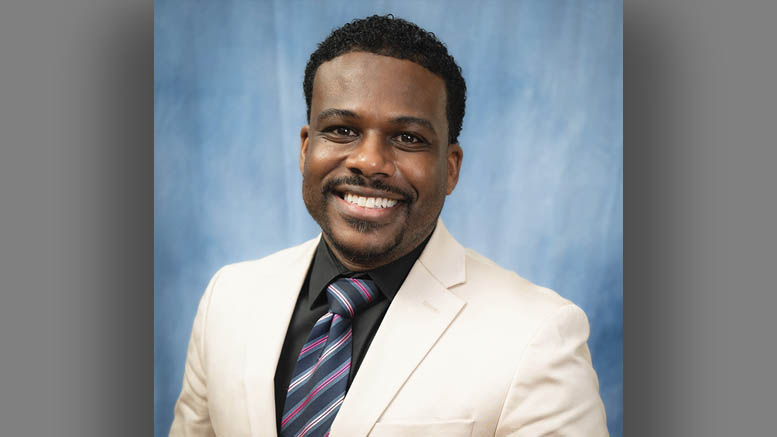

By Frank Scott II, Executive Director, Muncie Innovation Connector—
MUNCIE, IN—I was never a tenant of the Muncie Innovation Connector. I did not lease office space in the building on White River Boulevard, and my name was never on a door there. For a time, I assumed that meant the organization’s services were not built for someone like me.
That assumption was incorrect. While building K&B Detail and Agape Styles Clothing Brand through a series of setbacks, corrections, and hard-earned lessons, I discovered that the IC’s support did not require a lease. It required access, mentorship at the moments I needed direction, structure when my businesses needed discipline, and a community willing to invest in an entrepreneur who had not yet proven himself. That access, extended to me as a non-resident beneficiary rather than a housed client, is what ultimately positioned me to build something durable, and it is the foundation of the perspective I now bring to this organization as its Executive Director.
That experience is instructive for how Muncie should think about business incubation going forward: proximity to a building has never been the determining factor in whether support reaches an entrepreneur. Findability is. That distinction is now reshaping the incubation model nationally, and it is reshaping the IC’s strategy here at home.
Why the Business of Incubation Is Changing
For most of its history, business incubation was defined by four walls: a suite of offices, shared conference rooms, and a physical address an entrepreneur eventually “graduated” out of. That model is not obsolete, the IC continues to offer housed space, and it remains valuable, but three converging forces are compelling incubators nationwide to rebuild themselves around something broader than a building.
The first is artificial intelligence. The Federal Reserve’s 2026 survey on AI adoption in the U.S. economy found that 46 percent of small employer firms are already using AI in their operations, with another 15 percent planning to adopt it within the year, meaning a majority of small businesses will soon rely on AI-driven tools for tasks that once required a full office team. Entrepreneurs no longer need a physical staff to handle bookkeeping, marketing, or customer service; they need guidance on how to deploy the tools already available to them. That shifts an incubator’s core value from providing space to providing know-how.
The second is the rise of the solo and home-based operator. U.S. Census Bureau non-employer data puts the number of solo business operators nationally at roughly 29.8 million, generating an estimated $1.7 trillion in annual revenue, a segment expanding faster than employer businesses. National telework figures have held in the high teens to low twenties as a share of the workforce since 2022, a plateau, not a retreat, from pandemic-era highs. Many of today’s business owners are running real, revenue-generating operations from a kitchen table or a truck cab, and they were never going to walk into a lobby to find us.
The third is the incubation industry’s own response to the first two. Industry market analysis now identifies the shift from placed-based to ecosystem-based entrepreneurship. This has created an opportunity to expand our services to many more businesses, and helps provide for greater sustainability within our businesses and the community we serve.
Taken together, these forces point to a second, less-discussed question incubators must now ask alongside the traditional one of business stage, Beginning, Growth, or Scaling. The second question is whether an entrepreneur is too consumed by the daily demands of running their business to ever step away long enough to seek help. Many of the owners who need us most are not sitting in a waiting room. They are behind a counter, in a service vehicle, or at a desk well after closing hours, and they do not perceive that they have the time or the standing to pursue support.
Meeting Entrepreneurs Where They Are
This is why the next chapter of the IC is organized around presence, not solely around programming. It requires our team to be visible in the neighborhoods, community meetings, and civic gatherings where business owners are already present, rather than relying exclusively on entrepreneurs finding their way to us. It requires helping an owner recognize that the thirty minutes they believe they do not have is, in fact, recoverable, they have simply never been shown how to reclaim it or given explicit permission to invest it in their own growth.
A significant number of business owners are operating with more capacity than they realize. A central part of our mission is helping them recognize that capacity and demonstrating that meaningful support does not have to cost them the resource they fear losing most: time.
What Lies Ahead for the IC
The future of the IC is being built around a complete pathway that meets an entrepreneur at any starting point and accompanies them as far as they intend to go, beginning with a Genesis Profile that helps an individual understand their own entrepreneurial identity, continuing through a structured business health diagnostic, and advancing into mentorship, coaching, and sustained growth support.
We are also expanding how we reach entrepreneurs creatively. Our Media Entrepreneurship Lab, which we call the MEL, begins with our Innovation Podcast Studio, a dedicated space where local entrepreneurs, ideas, and stories can be produced and shared across the region. This investment reflects a straightforward reality: storytelling and media production are now part of how a small business builds a following, establishes a brand, and reaches customers, and we intend for Muncie’s entrepreneurs to have professional space to learn and create that content close to home.
None of this work is achievable by the IC alone, and our progress depends directly on the partners who share this vision. Among the collaborations I am most proud of is our partnership with Muncie Community Schools on Start Something Now, a middle school entrepreneurship club aligned with STEM instruction. Across monthly sessions culminating in a Pitch Showcase, students are given the opportunity to build something of their own, apply entrepreneurial thinking, and present what they have created. The long-term strength of this region depends on the generation coming up behind us, and few investments matter more than showing a middle school student that their ideas have value and that ownership can begin now, not someday.
A Region Positioned for What Comes Next
I have the privilege of leading this organization because someone made its resources accessible to me before I ever held a title. That someone was Ted Baker, CEO of the Muncie Innovation Connector. I was never housed at the IC; I simply needed the door to be open, and it was. Our responsibility now, as an organization and as a team, is to ensure that door remains open in more forms and more places than ever before, inside our building, out in the community, through a podcast microphone, and inside a middle school classroom, wherever an entrepreneur happens to be standing when they are finally ready to ask for help.
That is the direction of the Muncie Innovation Connector, and I believe it is the direction of this region. Your next is now, and we intend to meet you there.
Sources: Board of Governors of the Federal Reserve System, “Monitoring AI Adoption in the U.S. Economy” (April 2026); U.S. Census Bureau, Non-employer Statistics; industry market analysis on hybrid and virtual business incubation delivery models (2026).
