
Celebrating TRAC’s impact on early childhood, families, and the future of East Central Indiana
By Emma Dragoo—
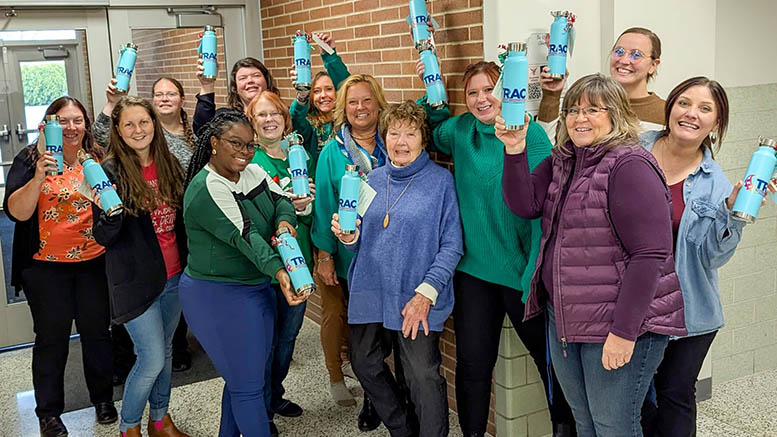
MUNCIE, IN—Some of the most important work in a community looks like a room full of people showing up to another meeting. But the meetings of TRAC (Training, Resource, and Advocacy Connector), East Central Indiana’s regional early childhood collaborative, were never just another calendar invitation. They were a place to share challenges, celebrate progress, and imagine solutions to problems no single organization or county could solve alone.
As this season of TRAC’s work supported by Regional Economic Acceleration and Development Initiative (READI) funding comes to a close, it deserves more than a final meeting or a line in a grant report. It deserves to be celebrated for what it made possible—and recognized for what must continue.
A funding chapter can close without diminishing the work it leaves behind.
According to the East Central Indiana Childcare Impact and Action Plan (September 2025), Indiana’s early care and learning crisis carries an estimated annual economic impact of $4.2 billion. Families face child care costs that can rival housing payments, while providers struggle to balance the expense of quality care with wages that attract and retain talented educators. When reliable, affordable care is unavailable, parents may be forced to reduce their hours or leave the workforce.
This is not simply a parenting problem. It is an education, workforce, economic development, and community issue.
Child care is essential infrastructure, and solving its challenges requires regional collaboration.
Across Blackford, Delaware, Fayette, Grant, Henry, Jay, Randolph, Rush, and Wayne counties, TRAC brought together early childhood professionals, schools, employers, economic developers, and community leaders to better understand local needs and develop practical solutions.
Over three years, TRAC’s educator trainings recorded 833 participant attendances, representing more than 550 individual educators. Training topics included trauma-informed practices, de-escalation, sensory regulation, early literacy, and learning through play.
In Delaware County, BY5 served as a convener and host for many TRAC training events, connecting local early childhood professionals with opportunities to learn, share knowledge, and strengthen their practice. This partnership illustrates how regional initiatives become meaningful at the local level: through organizations willing to bring people together and turn shared priorities into accessible opportunities.
When providers have the resources and guidance to grow, entire communities benefit.
Through two rounds of Regional Activity Support (RAS) grants in 2024 and 2025, TRAC awarded $344,000 to support 40 projects across the region. These investments helped providers improve facilities, purchase educational materials and play equipment, and expand capacity, supporting the creation of more than 200 additional child care seats.
Those grants were part of a broader effort. Across TRAC’s season of work, nearly 950 child care seats were created or supported through its various activities. These figures reflect different levels of impact: RAS represents a specific grant-funded investment, while the larger figure captures the broader regional effort.
Behind those numbers are families and communities experiencing tangible change.
At Monroe Central, an initiative that began by serving school employees grew into a community-serving early learning academy. RAS funding and TRAC’s guidance helped expand resources and capacity while supporting an early childhood education pathway for high school students pursuing a Child Development Associate credential and practical experience.
In Delaware County, Hazelwood Christian Preschool used grant support to strengthen facility security, support infant and toddler classrooms, and create a transition classroom for children needing additional learning opportunities following pandemic-era disruptions. For the first responder families Hazelwood serves, dependable child care helps parents serve their communities knowing their children are safe and cared for.
These are not abstract outcomes. They are local solutions built around real needs.
When families cannot access child care, the entire region misses out on economic opportunity.
The region’s Workforce Impact Analysis estimates that 2,207 “work-willing” parents in East Central Indiana want and are able to return to full-time employment but face barriers to reliable, affordable child care.
If these parents could return to full-time work, their earnings could generate an estimated $4 million to $5 million in additional annual state and county income tax revenue. The analysis also projects $175.4 million to $231.5 million in additional gross regional product. These are potential outcomes, not guaranteed gains, but they demonstrate how child care access affects families, employers, local businesses, and public finances.
Child care is workforce infrastructure. Reliable care helps parents work, employers retain talent, and children access early learning experiences that prepare them for school and life.
The need remains, even as the funding landscape changes.
Providers continue to face financial pressures, families struggle with affordability, and access remains uneven. The READI-supported season of TRAC’s work may have concluded, but regional early childhood collaboration continues in a new iteration.
The relationships strengthened, knowledge shared, and local solutions developed do not disappear when a grant period ends. BY5’s role in convening and hosting training events in Delaware County is one example of how local partnerships can sustain the connections that make regional progress possible.
TRAC demonstrated what happens when a region treats early childhood not as an isolated expense, but as a shared investment in its people and future. Continuing that progress will require collaboration, sustained investment, and recognition that the cost of inaction is borne by children, families, businesses, and communities alike.
To everyone who convened, trained, built, renovated, shared knowledge, supported providers, invested, and kept showing up: thank you. You helped educators grow, strengthened local programs, and contributed to a regional effort that created or supported nearly 950 child care seats.
A funding chapter has closed. The need has not. Neither has our responsibility to build a region where children thrive, families can work, and early childhood professionals can build sustainable careers.
The work continues wherever communities choose to invest in their youngest children.

Emma Dragoo is Assistant Director of Child Care Resources at BY5.
